In metering applications, efficiency is not only about reducing energy use or operating cost. It is about building a pressure regulating station that keeps downstream pressure stable, protects meter accuracy, minimizes unplanned shutdowns, and performs reliably under changing demand. Many stations do not lose efficiency because of one major fault, but because of small issues across regulation, filtration, layout, instrumentation, and maintenance.
A well-designed and properly maintained pressure regulating station supports accurate measurement, smoother process control, and longer equipment life. For operators, EPC contractors, distributors, and end users, improving efficiency means treating the station as a complete system rather than a group of separate components. The regulator, shut-off device, filter, valves, meter, pipe layout, and control instruments must work together to deliver stable and measurable performance.
Start with the Real Operating Conditions
One of the most common reasons a station performs below expectation is that it was selected using nominal conditions rather than real field conditions. A regulator that looks acceptable on paper may become inefficient if the actual flow range is wider than expected, if inlet pressure fluctuates sharply, or if downstream demand varies by season or shift.
Before improving any station, we recommend reviewing several core operating factors:
Actual minimum, normal, and peak flow
Inlet pressure variation range
Required outlet pressure stability
Gas or fluid cleanliness
Temperature conditions
Metering accuracy requirements
Future capacity expansion plans
A pressure regulating station designed only for current peak load may perform poorly at low-load conditions. Likewise, a station sized too conservatively may introduce unnecessary pressure loss and higher capital cost without improving metering performance.
Efficiency begins with correctly understanding how the station is truly used.
Choose the Right Regulator Size, Not Simply a Bigger One
Oversizing is often mistaken for safety. In reality, an oversized regulator can reduce controllability, especially in metering applications where precise downstream pressure is essential. If the regulator is too large for the normal operating range, it may hunt, respond poorly at low flow, or fail to maintain consistent outlet pressure. These pressure fluctuations can affect flow measurement and overall system stability.
A properly sized regulator should match the normal working band as closely as possible while still covering peak demand safely. In many projects, the best efficiency comes from balancing turndown capability with control sensitivity.
Signs of poor regulator sizing
Frequent outlet pressure oscillation
Poor low-flow regulation
Excessive noise during operation
Larger-than-necessary pressure droop
Unstable meter readings during changing demand
What we usually recommend
We generally advise customers to size around the real operating window rather than the absolute theoretical maximum. Where load variation is significant, using monitor regulators, active/monitor systems, or multi-stream configurations may provide better efficiency than simply installing one oversized regulator.
Reduce Pressure Loss Across the Station
In metering applications, unnecessary pressure loss directly affects efficiency. Every extra restriction in the station can reduce usable pressure, increase regulator workload, and create less favorable conditions for accurate metering.
Pressure loss often comes from avoidable sources such as undersized piping, clogged filters, poor valve selection, abrupt pipe direction changes, or an unsuitable station layout. Even when each component individually appears acceptable, the combined effect can be substantial.
Common causes of avoidable pressure loss
Area | Typical Efficiency Problem | Practical Improvement |
Inlet filtration | Dirty or undersized filter creates excessive differential pressure | Select correct filter area and establish routine cleaning or replacement intervals |
Piping design | Small pipe diameter or too many bends increases resistance | Optimize line sizing and simplify flow path |
Valve selection | High-resistance valves or partially open valves restrict flow | Use full-port designs where appropriate and confirm correct valve position |
Regulator sizing | Incorrect sizing causes larger pressure droop | Match regulator capacity to the actual operating range |
Station layout | Crowded layout creates turbulence before meter runs | Improve straight-run design and spacing between components |
Maintenance | Internal wear and contamination reduce flow efficiency | Introduce preventive inspection and servicing schedule |
Improving pressure loss is not only about flow capacity. It also helps create more stable upstream and downstream conditions for the meter, which can improve the consistency of measurement data.
Protect Meter Accuracy Through Pressure Stability
A metering application depends on more than the meter itself. Even a high-quality meter can underperform if the pressure regulating station feeds it unstable flow conditions. Sudden pressure fluctuations, pulsation, and turbulence can all affect repeatability and measurement confidence.
That is why pressure stability should be treated as a metering issue, not only as a regulation issue.
Key methods to improve pressure stability
Maintain proper upstream conditioning
The regulator and the meter both benefit from stable upstream flow. This means using adequate straight pipe runs, avoiding turbulence sources too close to the meter, and selecting filters and valves that do not create unnecessary flow disturbance.
Avoid aggressive pressure reduction in one stage
If the pressure ratio is too high, a single-stage reduction may generate noise, vibration, and unstable downstream behavior. In such cases, a two-stage design can improve control accuracy and reduce mechanical stress.
Match control characteristics to application demand
Different metering applications behave differently. Industrial demand can shift abruptly, while utility distribution loads may vary more gradually. Choosing the right control mode, spring range, pilot design, or monitor arrangement can make a large difference in outlet stability.
Use reliable sensing and feedback arrangement
Poor impulse line routing, bad tapping points, or delayed sensing can all weaken regulation performance. The sensing system should be kept clean, protected, and correctly positioned to reflect actual downstream conditions.
Keep Filtration Clean and Appropriately Rated
Filtration is often viewed as a protective accessory, but in practice it is a major efficiency factor in pressure regulating stations. Contaminants can damage regulator internals, affect shut-off performance, distort measurement conditions, and increase maintenance frequency.
A filter that is too small or poorly maintained can become a hidden source of pressure drop. On the other hand, a properly selected filter helps stabilize performance across the whole station.
We typically recommend evaluating filtration from both protection and efficiency perspectives. The objective is not simply to catch particles, but to do so without creating unnecessary restriction. This means considering flow capacity, filtration grade, dirt-holding capacity, maintenance accessibility, and differential pressure monitoring.
In demanding environments, adding differential pressure indicators or scheduled inspection intervals can prevent unnoticed clogging from degrading station efficiency over time.
Improve Layout, Accessibility, and Serviceability
A pressure regulating station may have high-quality components and still perform poorly if the layout is not practical. Tight layouts can create poor flow paths, difficult maintenance access, and increased service time. Over the life of the station, these issues reduce efficiency in very practical ways.
We have found that the most efficient stations are usually those that are easy to inspect, easy to isolate, and easy to maintain. Operators are far more likely to carry out routine checks when gauges, filters, valves, and test points are accessible.
Layout principles that support efficiency
Provide enough straight run before and after critical components
Avoid unnecessary elbows close to meters and regulators
Ensure filter elements can be removed easily
Keep gauges and instruments visible and readable
Allow safe access for shut-off testing and maintenance
Design bypass lines carefully and only where justified operationally
A clean and serviceable layout saves labor, shortens downtime, and reduces the likelihood of maintenance being postponed.
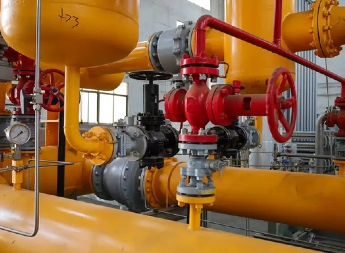
Use Monitoring and Automation Where It Adds Real Value
Digital monitoring is becoming increasingly important in modern metering applications. While not every station needs a highly complex automation package, even basic monitoring can significantly improve efficiency by making performance changes visible before they become failures.
Useful monitored parameters often include:
With these signals, operators can identify creeping regulator issues, filter blockage, unusual demand patterns, or recurring instability. This allows maintenance to become more predictive instead of reactive.
For distributed station networks, remote monitoring can also reduce field visits, shorten troubleshooting time, and improve operational decision-making. The key is to implement instrumentation that supports real action rather than collecting data with no maintenance response strategy behind it.
Focus on Preventive Maintenance, Not Only Emergency Repair
Many pressure regulating stations appear efficient until performance drifts slowly over time. Springs fatigue, soft parts age, seats wear, filters load up, sensing lines accumulate debris, and instruments go out of calibration. None of these changes may cause an immediate shutdown, but together they reduce station efficiency step by step.
A preventive maintenance plan should be based on operating conditions, not just calendar intervals. Stations in dusty, high-load, or highly variable environments generally need closer attention than those operating under stable clean conditions.
A strong maintenance program should include
Regular filter inspection or replacement
Regulator performance checks
Leak inspection
Shut-off device testing
Gauge and transmitter verification
Cleaning of sensing and impulse lines
Review of pressure and flow trends for abnormalities
The goal is not to over-maintain equipment, but to maintain it before declining performance affects metering accuracy or service continuity.
Train Operators to Recognize Early Efficiency Loss
Even the best-designed station depends on human observation. Operators who understand how a pressure regulating station should behave can identify issues early: slow outlet drift, abnormal sound, changing differential pressure, or erratic readings.
Training should cover more than basic operation. It should also include the relationship between regulation performance and metering performance. When teams understand that unstable pressure can compromise measurement quality, they are more likely to respond quickly to warning signs.
In our view, practical field awareness is one of the most cost-effective ways to improve station efficiency over the long term.
Consider Expansion and Lifecycle Cost from the Beginning
Efficiency should also be measured over the full service life of the station. A lower initial equipment cost may lead to higher lifecycle cost if the station is difficult to maintain, prone to instability, or unable to adapt to future demand changes.
When evaluating station improvements, we recommend looking at questions such as:
Can the station handle future capacity growth?
Are spare parts easy to source?
Is the design maintenance-friendly?
Does the control scheme remain stable across load changes?
Will the instrumentation support long-term diagnostics?
An efficient station is not just one that performs well on day one. It is one that continues to deliver stable regulation and reliable metering with manageable maintenance effort over many years.
Conclusion
Improving pressure regulating station efficiency in metering applications requires a practical, system-level approach. Better efficiency comes from accurate sizing, stable pressure control, lower pressure loss, clean filtration, sound layout, useful monitoring, and disciplined maintenance. When these factors work together, the result is not only lower operating burden but also better metering reliability and stronger overall station performance.
At NOBLEST EQUIPMENT TECH LIMITED, we believe the most effective solutions come from understanding the real working conditions of each application rather than applying a one-size-fits-all approach. For companies looking to optimize pressure regulating station performance, improve metering stability, or review station design for long-term efficiency, it is worth discussing the project in detail with an experienced supplier. Readers who would like to explore suitable solutions further are welcome to learn more from NOBLEST EQUIPMENT TECH LIMITED.
FAQ
Q: Why is pressure stability so important in metering applications?
A: Pressure stability helps maintain consistent flow conditions through the meter. When outlet pressure fluctuates too much, metering accuracy, repeatability, and downstream process stability can all be affected.
Q: Does a bigger regulator always improve pressure regulating station efficiency?
A: No. An oversized regulator can reduce low-flow control sensitivity and cause unstable outlet pressure. Correct sizing for the real operating range is usually more efficient than simply choosing a larger model.
Q: How does filtration affect a pressure regulating station in metering applications?
A: Proper filtration protects regulator internals and meters from contamination, while poor filtration maintenance can increase differential pressure and reduce station efficiency. The right filter should balance protection, flow capacity, and serviceability.
Q: What is the most practical way to improve long-term station efficiency?
A: A combination of preventive maintenance, differential pressure monitoring, regulator performance checks, and operator training is often the most practical approach. These measures help identify efficiency loss before it affects metering performance or causes downtime.


