In gas engineering, the value of a skid system is not only about its frame, footprint, or delivery speed, but about how well all internal components work together as one stable unit. A skid-mounted gas system is designed to simplify installation and improve reliability, and this depends heavily on proper pressure regulating station integration. When the pressure regulating station is fully integrated into the skid, rather than added as a separate device, the system is usually easier to install, easier to commission, and more stable in daily operation, which is especially important in LNG and CNG projects.
The skid concept is about more than compact equipment
Many buyers choose skid systems because they want faster project delivery and less construction work at site. That is a valid reason, but it is only part of the picture. A skid is valuable not merely because it is compact, but because it turns multiple functions into one organized unit.
In gas applications, a skid may combine filtration, pressure reduction, shut-off functions, metering, heating, control instrumentation, and safety protection. If these elements are only placed side by side without real engineering coordination, the skid may look complete while still creating operational problems. By contrast, if the system is designed as one process package, the skid can provide a much smoother experience from installation to daily use.
This is why pressure regulating station integration should not be understood as a packaging choice alone. It is a process design choice.
Why the pressure regulating station deserves special attention
Pressure regulation sits at the center of gas delivery logic. In both LNG and CNG systems, upstream supply pressure is often much higher than what downstream equipment or pipeline networks can safely accept. The station must reduce pressure, maintain stability, and respond properly when demand changes.
That sounds straightforward in theory, but in practice it affects several parts of the skid at once. Regulator sizing influences flow behavior. Filter placement affects regulator performance. Valve arrangement affects safety response. Instrument location affects control accuracy. Maintenance access affects whether the system can continue operating reliably over time.
Because of this, the pressure regulating station is not just another component group inside the skid. It is one of the functions that defines how the whole module behaves.
Integration changes the way the skid performs
A skid with an integrated pressure regulating station usually performs differently from a skid where pressure regulation has been added with limited coordination. The difference is not always obvious at first glance, but it becomes visible during installation, startup, and operation.
Installation becomes more controlled
When pressure regulation is integrated from the design stage, piping routes, valve spacing, instrument supports, and connection points can all be planned in advance. This reduces surprises during field installation and lowers the chance of on-site modification.
In many projects, the real challenge is not obtaining the equipment but making everything fit and function correctly under site conditions. Integration helps solve that problem before the skid reaches the customer.
Commissioning becomes more predictable
A pressure regulating station interacts with many other parts of the gas process. If the station is engineered together with the skid, the startup sequence tends to be clearer and more stable. Instrument readings are easier to interpret, control points make more sense, and abnormal conditions are easier to identify.
This matters because a skid should shorten the path from delivery to operation. A system that still requires major adjustment after arrival has not fully achieved the benefit of modularization.
Operation becomes steadier
In service, stable pressure is one of the strongest signs of a well-integrated gas skid. When the regulator, safety devices, and piping layout are coordinated properly, the system can handle routine flow variation with less disturbance. That supports downstream combustion, process consistency, and equipment protection.
In our experience, operators notice this quickly. A skid that runs smoothly with fewer manual corrections usually reflects better integration inside the pressure regulating section.
A common mistake: thinking modular means simplified engineering
There is a misconception in some projects that skid-mounted design automatically makes engineering easier. In fact, modular design often demands more discipline at the design stage because there is less room to correct problems later.
If a pressure regulating station is left to the end of the design process, the skid may suffer from several avoidable weaknesses. Pipe runs may become inefficient. Safety devices may be placed where access is poor. Instruments may be installed in positions that reduce readability or response quality. Maintenance space may be sacrificed to save footprint. None of these problems looks dramatic in a drawing, but all of them can affect performance in the field.
True skid quality comes from integrating the regulating station early, not simply fitting it into the remaining space.
Where integration adds measurable value
Different projects highlight different benefits, but several advantages appear repeatedly when pressure regulating stations are integrated well into skid systems.
Project Area | Weakly Coordinated Skid | Well-Integrated Skid |
Site installation | More adjustments and connection issues | Faster setup with fewer field changes |
Pressure stability | Greater risk of fluctuation | More consistent outlet pressure |
Safety arrangement | Devices may feel added on | Protection functions work as one system |
Maintenance access | Service can be inconvenient | Inspection and repair are easier |
Startup efficiency | More tuning and troubleshooting | Smoother commissioning |
Long-term reliability | Performance depends heavily on site conditions | Better repeatability and operating confidence |
The value here is not limited to technical performance. It also affects project schedule, operator workload, and lifecycle cost.
In LNG and CNG skids, integration becomes even more important
Although skid integration is useful in many gas systems, LNG and CNG applications make the issue more critical because the pressure transition is often large and the operating conditions can be demanding.
LNG skids
In LNG systems, gas typically passes through storage, vaporization, and then regulated delivery. After vaporization, the gas still needs to be controlled to match downstream use. If the pressure regulating station is well integrated, the skid can manage the transition from cryogenic storage support to stable gas delivery more effectively.
This is especially valuable in regasification skids, satellite station support modules, and peak shaving systems, where reliable response is a practical requirement rather than a design preference.
CNG skids
In CNG applications, high-pressure gas must be reduced safely and accurately before use. This process places heavy responsibility on regulator performance, valve logic, and protective design. A skid that integrates these functions properly can offer safer operation and more dependable downstream supply.
For CNG pressure reducing skids, integration also helps prevent the system from becoming overly complex at site, which is important in industrial and distributed energy projects.
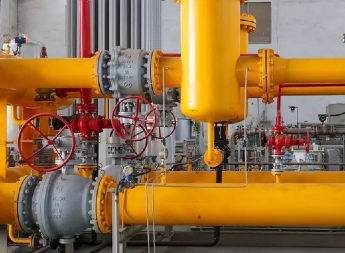
Integration also affects maintenance culture
Good skid design is not just about first delivery. It should also support the people who operate and maintain the system afterward. This is another reason pressure regulating station integration matters.
If regulators, shut-off valves, instruments, and filters are packed into the skid without enough thought for serviceability, even routine maintenance can become disruptive. Operators may need to dismantle surrounding sections just to access one part. Instrument checks may be delayed because gauge locations are inconvenient. Small maintenance burdens accumulate and slowly reduce system reliability.
A better integrated skid avoids this. It considers maintenance pathways, component spacing, visibility, and replacement practicality from the beginning. Over time, this contributes to more consistent performance and fewer service-related shutdowns.
The commercial value of better integration
There is also a business side to this issue. A skid with a well-integrated pressure regulating station can lower total project friction. It can reduce installation labor, shorten startup time, limit field rework, and support more stable operation afterward. Even when the initial equipment investment is not the lowest, the total project result may still be better.
That is why we see integration not as an optional refinement, but as a practical factor in project success. For companies managing schedules, safety expectations, and operating cost, that broader value matters.
Integration supports standardization without losing functionality
One of the strengths of skid systems is the potential for standardization. Repeating a proven module design can improve manufacturing efficiency and project consistency. But standardization only works well when the integrated process design is sound.
A pressure regulating station that is properly integrated into the skid can support this kind of repeatable quality. The module becomes easier to reproduce with confidence because the internal relationships between components are already resolved. This is far more useful than repeating a layout that only appears compact but performs inconsistently in real use.
Conclusion
Pressure regulating station integration matters in skid systems because it influences far more than pressure reduction alone. It affects how easily the skid is installed, how predictably it is commissioned, how steadily it operates, how safely it responds to abnormal conditions, and how practically it can be maintained over time. In LNG and CNG applications especially, integration helps turn a skid from a collection of parts into a dependable working system.
For projects that require compact gas solutions with reliable performance, the quality of pressure regulating station integration deserves close attention from the start. Readers who want to explore skid-mounted gas systems and integrated pressure regulation solutions in more detail can learn more from NOBLEST EQUIPMENT TECH LIMITED.
FAQ
Q: Why does pressure regulating station integration matter in skid systems?
A: It matters because it improves pressure stability, safety coordination, installation efficiency, and overall skid performance.
Q: What is the advantage of an integrated skid over separate gas equipment installation?
A: An integrated skid usually offers faster installation, easier commissioning, and more consistent operation.
Q: Is pressure regulating station integration important for both LNG and CNG skids?
A: Yes. In both LNG and CNG applications, good integration helps manage pressure safely and supports reliable gas delivery.
Q: What should users check when reviewing a skid-mounted pressure regulating station solution?
A: They should check layout quality, pressure compatibility, safety device coordination, maintenance access, and overall system integration.


